Concert Review: Twilight Musical Dialogues – Spain and South America/ Walker/Rojas-Gonzales/Carraro
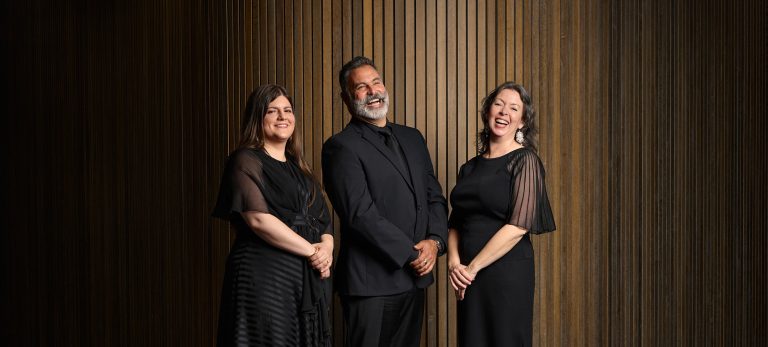
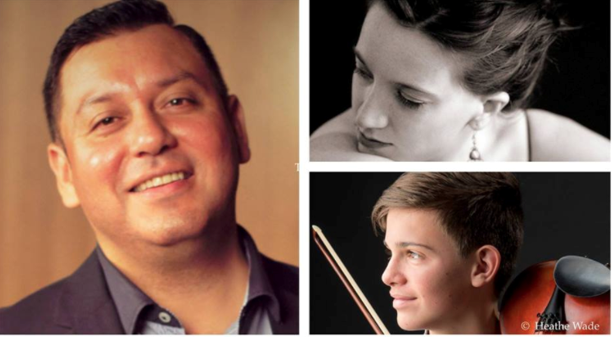
Daniel Rojas-Gonzales, Sally Walker and William Carraro

Twilight Musical Dialogues: Music from Spain and South America

Sally Walker, flute, Daniel Rojas-Gonzales, piano, William Carraro, violin

10 November, 2017

Adamstown Uniting Church, Newcastle, New South Wales

Written by Joseph Asquith

It was an inimitable night for music in the city of Newcastle, with the fifth concert of Twilight Musical Dialogues featuring music of Spain and South America.

This time, flautist extraordinaire and artistic director of the concert series, Sally Walker was joined by acclaimed pianist of tango and Latin music Daniel Rojas-Gonzales, along with a special appearance from rising young violinist William Carraro.

Much of the charm of this concert lay in the variety of styles encompassed within the wider idiom of Spanish and South American music. There was tango with a flute and piano rendition of Astor Piazzolla’s Oblivion (arranged by Rojas-Gonzales) and Coco Nelegatti’s El Cronopio and Milonga del Serafin, Argentinian folk inflections in Introducción y Allegro by Carlos Guastivino and the perhaps more familiar Spanish melodic themes in the seamless virtuosity of Carmen Fantasy, written by François Borne. A premiere of Navegar by Daniel Rojas-Gonzales himself also took place in this concert. Navegar draws influence from milonga campera, a slow subgenre of tango, which gave this piece an aesthetic of contemplation coupled with an infectious rhythmic drive.

Featured in this concert additionally were the talents of fourteen-year old violinist William Carraro, who performed the tango-influenced work Jalousie by Jacob Thune Hansen Gade. Carraro infused his playing with the necessary rhythmic energy and dynamic passion for which tango music is renowned. This performance was delivered by Carraro with confidence, polish and poise, ensuring a highly promising candidate in the future of Australian music. As a welcome gratuity, the end of concert invited Tango dancers to the stage in elegant ‘flash-mob’ style.

This was the final instalment of the 2017 Twilight Musical Dialogues concert series. This concert, like all others in the series, was performed with reverence, engagement, élan, sophistication and world-class musicianship. The series has been an important part of the musical rejuvenation in the city of Newcastle, giving hope to musicians and audience members alike.

Joseph Asquith for SoundsLikeSydney©

Newcastle-based pianist, Joseph Asquith is a writer and educator who developed a love for music in his teens, while learning piano with esteemed Newcastle pianist/teacher Marilyn Wilson. Joseph subsequently completed his Bachelor of Music (Honours) in 2015 at the University of Newcastle, studying with Helen English and Rosalind Halton.

Joseph has also received private piano tutelage from renowned pianists Michael Kieran-Harvey (Tasmania), Andrew Chubb (Newcastle) and Paul Hersh (San Francisco). He is a sought-after ensemble member/accompanist, using his skill in various genres including opera, classical, folk and contemporary pop.

Joseph has a love for musicology and writing about music. He established a reputation as a freelance music journalist in Newcastle, reviewing touring artists. As a writer he has liaised with prestigious national and international artists and ensembles including Imogen Cooper, Elena Kats-Chernin, The Sitkovetsky Trio, American Brass Quintet, and the Keleman String Quartet. 
Similar Posts

  • Concert Review: Splendour And Mystery/Sydney Chamber Choir

    Splendour and Mystery/ Sydney Chamber Choir
    Verbrugghen Hall, Sydney Conservatorium of Music
    Australian Digital Concert Hall
    25 March, 2023
    In Splendour and Mystery, Sydney Chamber Choir under the direction of Sam Allchurch joined forces with Camerata Antica led by Matthew Manchester and organist Thomas Wilson in an adventurous anthology of music written for double choir. Specialising in the music of the 16th and 17th centuries, the founder of Camerata Antica, Matthew Manchester playing the fiendishly difficult cornetto, was joined by Michael Wyborn, William Kinmont and Paolo Franks playing the equally challenging alto, tenor and bass sackbutts respectively.
    Bookended with pieces by Giovanni Gabrieli with one of his refreshing Canzonas in the middle, the program also contained music by living Australasian composers Clare Maclean and Brooke Shelley, Gabrieli’s contemporary and student Heinrich Schütz and 20th century composers John Tavener and Frank Martin. Together these composers explore and exploit the potential of the double choir with its opportunities for super-rich harmonies, added melodic lines, imitation, choral interplay and variations in the positioning of the singers.
    The opening motet, Gabrieli’s Jubilate Deo omnis terra, C 65 was quite literally a musical shout for joy. A major part of this journey back in time to Renaissance Venice was the unique sound of Camerata Antica. Heralded by the instruments, the 10 lines of the choir sang an uplifting, lively and tightly dotted chorus, alternating with homophonic passages. Allchurch and his ensemble clearly delineated the rhythms, changing time signatures, hemiolas and other displaced accents which created the buoyancy of this celebratory piece.
    John Tavener’s brilliant A Hymn to the Mother of God transcends the mortal and looks to the cosmic powers of Mother Mary. Writing in the style of canon, with imitative lines that start in quick succession and not necessarily in harmony, Tavener creates a sense of ‘other-worldliness’ in this simple but awe-inducing piece in three-sections. It was a slow burn as the two choirs sang with shimmering lightness and a sense of spinning through space, creating vivid colours and  clusters of clashing chords with impressive control as the voices rose in range and dynamic to its full-bodied climax.
    The program moved imperceptibly to the German Magnificat by Heinrich Schütz, as the choirs were joined by organ and instruments. This was a relevant and important inclusion as Gabrieli himself taught Schütz in this multi-choral technique which Schütz then developed in his own style.
    Clare Maclean’s moving Christ the King was sublimely sung, opening in the manner of a plainchant by the female voices which peeled off into mirroring phrases by the other voices, ending in a reprise of the plainchant. Premiered by this choir in 1984, it is precisely opportunities like these which new composers need for their music to be heard and re-heard until it becomes recognizable to listeners and enters the DNA of the concert repertoire.
    The short and brilliant burst of Gabrieli’s Canzona seconda, C 187  from Camerata Antica showcased these rudimentary instruments in all their imperfect glory as the choir positioned itself for Frank’s only unaccompanied choral work, the demanding  Mass for double choir, considered to be one of the finest and most complex pieces of 20th century choral music. The choir did ample justice to this piece which incorporates the aesthetics of Renaissance music, French Impressionism, Schoenberg’s twelve-note system and J S Bach. The altos began the Kyrie with a freely-flowing, supplicating melody; the Gloria built step-wise to cluster chords; the Credo was a business-like affirmation of faith; the canon-styled Et Resurrexit was levity, hope and word-painting to perfection; the Sanctus introduced softer harmonies from the male voices. The mass, Version 1, ended with a powerful Benedictus. Fast forward to 1926 and Martin added the Agnus Dei, the crowning glory to this choral magnum opus. The mass culminated in a glorious unification of the choirs.
    Brooke Shelley’s Heavenly Father, composed in 2022, performed in the presence of the composer was premiered in November 2022, by the Sydney Chamber Choir. A lyrical and beautifully textured piece, it is very pleasing that it has quickly been programmed again. Like the slightly older piece by Maclean, it is critical that new pieces of merit such as these, are given regular and frequent hearings so that they may be heard widely and face the test of time.
    Finally, Gabrieli’s Magnificat a 14, C 79 brought together the full instrumental and vocal forces of the ensemble. Using the 16th century Venetian technique of cori spezzati (split choirs), the brighter sound of the female voices and cornetto took to the left gallery with the male voices and the thrilling grunt of the bass and other sackbutts in the right gallery with a mixed ensemble placed and organ placed centrally on stage.
    This was an intelligent and audacious program from Allchurch, performed with glorious sound by a choir secure in technique, pitch and musicianship.

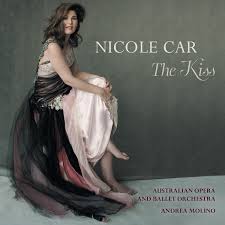
  • CD Preview: The Kiss/ Nicole Car/ Australian Opera And Ballet Orchestra/ Andrea Molino

    Hot on the heels of her successful debut at the Royal Opera, Covent Garden, late in 2015 and several lauded roles for Opera Australia over the past few years, soprano Nicole Car has released her debut album The Kiss (ABC Classics). For the recording, Andrea Molino conducts the Australian Opera and Ballet Orchestra, an ensemble…

Leave a Reply

Your email address will not be published. Required fields are marked *