The Sydney Chamber Choir and Sydney Camerata join forces for Easter cantatas
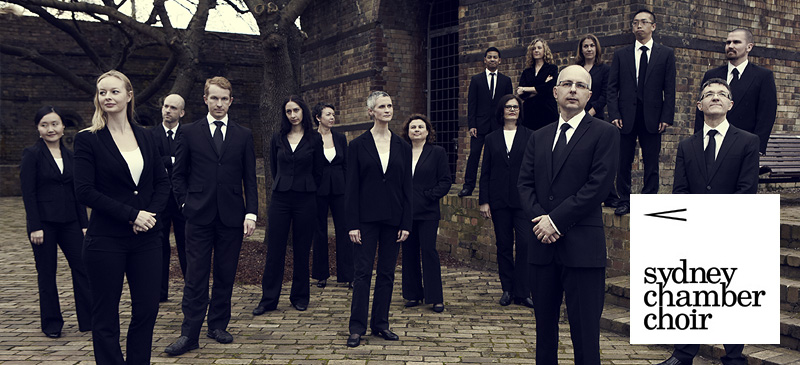
The Sydney Chamber Choir conducted by its Musical Director Paul Stanhope performs two vividly contrasting Eastertide settings of Christ’s final words on the cross. James MacMillan’s dramatic cantata Seven Last Words from the Cross delivers a powerful Easter message, alongside a sublime contemplative setting by the German Baroque master Heinrich Schütz.

Themes of sorrow and redemption are further explored in the anguished music of Lassus, Victoria and Gesualdo. The ensemble will premiere a new a cappella movement from the Missa Solis: Requiem for Eli by the two-time APRA Award-winning Australian composer Nigel Westlake. Written as a tribute to his son, tragically lost in an accident, it provides a personal perspective on suffering and the healing power of music.

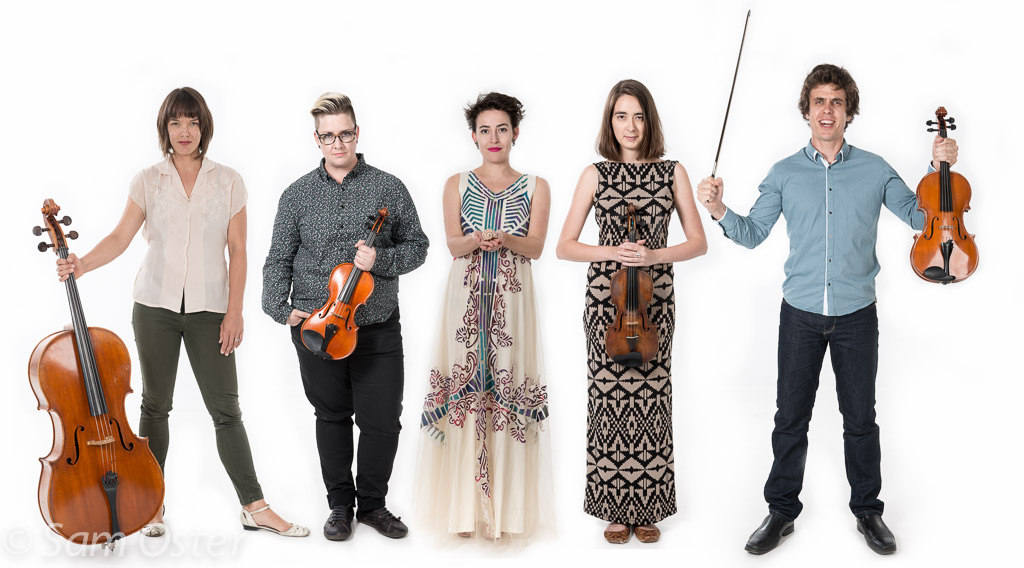
In another ‘first’, the Sydney Chamber Choir will join forces with chamber ensemble Sydney Camerata. Formed in 2008 by its Artistic Director and cellist Mathisha Panagoda, Sydney Camerata is a young and exuberant ensemble comprising some of the finest emerging classical musicians in Australia. In its brief career, Sydney Camerata has already garnered a formidable reputation. In 2010 the sextet of core members was awarded the prestigious Sydney Eisteddfod Musica Viva Award for Chamber Music and in 2012 their String Quartet was named Musica Viva’s ‘Rising Stars’, participating in the Musica Viva development programme.

Mathisha Panagoda says, “The Sydney Camerata are most excited to join forces with the Sydney Chamber Choir in their performance of Seven Last Words on March 24 in the magnificent setting of the University of Sydney’s Great Hall.”

He adds, “This will be the first time Sydney Camerata has performed with a choir and we feel very fortunate to be working under the direction of renowned Australian composer and musical director Paul Stanhope.

We will be performing two pieces with the choir both based on the seven last words of Christ from the cross. The first work by Heinrich Schütz (1585-1672) will involve a smaller ensemble of 7 string players performing with baroque bows. The second work we will perform is by contemporary British composer James MacMillan (b. 1959) for which our ensemble will double in size to 14 string players performing on their modern instruments. The work contains numerous challenging passages for the musicians as well as some beautifully lyrical solo passages.”

For this collaboration, Sydney Camerata is joined by guest concertmaster Peter Clark from Melbourne, and string players from Sydney, Melbourne and Brisbane.

Tickets from $20.

Click here to book.
 

Similar Posts

  • 17th Century Madrigals Meet 20th Century Tango

    Ancient Italian songs and modern Latin dance become entwined when the Australian Brandenburg Orchestra directed by Paul Dyer AO  presents Buenos Aires Tango with Eduardo Egüez & members of his Buenos Aires-based La Chimera. The instrumental ensemble La Chimera was founded in 2001 with “a particular interest in the relationship between the old world and the modern world.”. The Chimera”…

  • Concert Review: Splendour And Mystery/Sydney Chamber Choir

    Splendour and Mystery/ Sydney Chamber Choir
    Verbrugghen Hall, Sydney Conservatorium of Music
    Australian Digital Concert Hall
    25 March, 2023
    In Splendour and Mystery, Sydney Chamber Choir under the direction of Sam Allchurch joined forces with Camerata Antica led by Matthew Manchester and organist Thomas Wilson in an adventurous anthology of music written for double choir. Specialising in the music of the 16th and 17th centuries, the founder of Camerata Antica, Matthew Manchester playing the fiendishly difficult cornetto, was joined by Michael Wyborn, William Kinmont and Paolo Franks playing the equally challenging alto, tenor and bass sackbutts respectively.
    Bookended with pieces by Giovanni Gabrieli with one of his refreshing Canzonas in the middle, the program also contained music by living Australasian composers Clare Maclean and Brooke Shelley, Gabrieli’s contemporary and student Heinrich Schütz and 20th century composers John Tavener and Frank Martin. Together these composers explore and exploit the potential of the double choir with its opportunities for super-rich harmonies, added melodic lines, imitation, choral interplay and variations in the positioning of the singers.
    The opening motet, Gabrieli’s Jubilate Deo omnis terra, C 65 was quite literally a musical shout for joy. A major part of this journey back in time to Renaissance Venice was the unique sound of Camerata Antica. Heralded by the instruments, the 10 lines of the choir sang an uplifting, lively and tightly dotted chorus, alternating with homophonic passages. Allchurch and his ensemble clearly delineated the rhythms, changing time signatures, hemiolas and other displaced accents which created the buoyancy of this celebratory piece.
    John Tavener’s brilliant A Hymn to the Mother of God transcends the mortal and looks to the cosmic powers of Mother Mary. Writing in the style of canon, with imitative lines that start in quick succession and not necessarily in harmony, Tavener creates a sense of ‘other-worldliness’ in this simple but awe-inducing piece in three-sections. It was a slow burn as the two choirs sang with shimmering lightness and a sense of spinning through space, creating vivid colours and  clusters of clashing chords with impressive control as the voices rose in range and dynamic to its full-bodied climax.
    The program moved imperceptibly to the German Magnificat by Heinrich Schütz, as the choirs were joined by organ and instruments. This was a relevant and important inclusion as Gabrieli himself taught Schütz in this multi-choral technique which Schütz then developed in his own style.
    Clare Maclean’s moving Christ the King was sublimely sung, opening in the manner of a plainchant by the female voices which peeled off into mirroring phrases by the other voices, ending in a reprise of the plainchant. Premiered by this choir in 1984, it is precisely opportunities like these which new composers need for their music to be heard and re-heard until it becomes recognizable to listeners and enters the DNA of the concert repertoire.
    The short and brilliant burst of Gabrieli’s Canzona seconda, C 187  from Camerata Antica showcased these rudimentary instruments in all their imperfect glory as the choir positioned itself for Frank’s only unaccompanied choral work, the demanding  Mass for double choir, considered to be one of the finest and most complex pieces of 20th century choral music. The choir did ample justice to this piece which incorporates the aesthetics of Renaissance music, French Impressionism, Schoenberg’s twelve-note system and J S Bach. The altos began the Kyrie with a freely-flowing, supplicating melody; the Gloria built step-wise to cluster chords; the Credo was a business-like affirmation of faith; the canon-styled Et Resurrexit was levity, hope and word-painting to perfection; the Sanctus introduced softer harmonies from the male voices. The mass, Version 1, ended with a powerful Benedictus. Fast forward to 1926 and Martin added the Agnus Dei, the crowning glory to this choral magnum opus. The mass culminated in a glorious unification of the choirs.
    Brooke Shelley’s Heavenly Father, composed in 2022, performed in the presence of the composer was premiered in November 2022, by the Sydney Chamber Choir. A lyrical and beautifully textured piece, it is very pleasing that it has quickly been programmed again. Like the slightly older piece by Maclean, it is critical that new pieces of merit such as these, are given regular and frequent hearings so that they may be heard widely and face the test of time.
    Finally, Gabrieli’s Magnificat a 14, C 79 brought together the full instrumental and vocal forces of the ensemble. Using the 16th century Venetian technique of cori spezzati (split choirs), the brighter sound of the female voices and cornetto took to the left gallery with the male voices and the thrilling grunt of the bass and other sackbutts in the right gallery with a mixed ensemble placed and organ placed centrally on stage.
    This was an intelligent and audacious program from Allchurch, performed with glorious sound by a choir secure in technique, pitch and musicianship.

  • Selby and friends – a feast of rarities

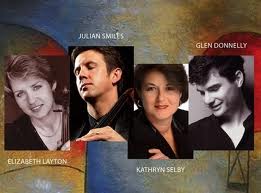
    For the fourth tour of the 2012 Selby & Friends concert season, pianist Kathryn Selby is joined by British violinist Elizabeth Layton, former member of the famed Nash Ensemble and leader of the BBC Scottish Symphony Orchestra, Australian violist Glen Donnelly and virtuoso cellist Julian Smiles, in a program of masterpiece for piano quartet. The programme includes My Song…

  • Brahms And Clara Schumann From Bel A Capella

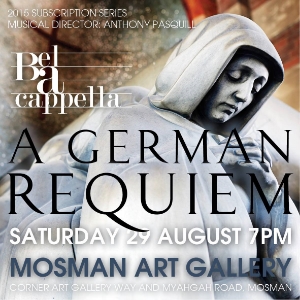
    Fresh from their tour to Europe, Sydney choral ensemble Bel a cappella presents Brahms’ A German Requiem and Liebeslieder Waltzes and the delightful motet Abendfeir in Vendig by Clara Schumann.  Featuring soloists soprano Celeste Lazarenko and bass Alex Knight, with pianists Jo Allan and Michael Curtain and the Sydney Symphony Orchestra’s Richard Miller on Timpani, Musical…

  • Australian Female Composers Feature In Eternal Summer

    Eternal Summer, a production by soprano Laura King, is an intimate vocal performance exploring the art of story-telling and a woman’s voice in contemporary Australia. It is  a musical and visual feast, a dramatic journey through the feminine, the landscape of nature, magical fairy tales, romance, and the art of story-telling through song. Laura King, soprano…

  • Zephyr and Jane Sheldon Discover The Unknown

    The Zephyr Quartet and soprano Jane Sheldon join forces paying tribute to composers unknown in Música Anonymous. In an age where there is almost no such thing as anonymity, Música Anonymous brings together Adelaide’s award winning Zephyr Quartet and acclaimed New York-based Sydney-born soprano Jane Sheldon, in a program that pays tribute to composers unknown.  Through the medium…

Leave a Reply

Your email address will not be published. Required fields are marked *