Album Review: Fable/Dennett/Move

Fable

Jacinta Dennett, harp

Move Records

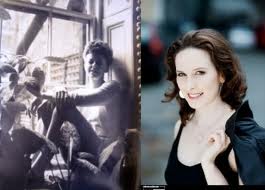
Harpist Jacinta Dennett’s solo album Fable features the music of female Australian composers whose lives and work span more than six decades. Recorded during the COVID-19 lockdowns in Melbourne and released on Move Records, the title is taken from Helen Gifford’s piece which is the opening track.

This title track provides an engaging introduction with varied tone colours, sometimes reminiscent of other stringed instruments (e.g. guitar), in a chromatic but materially indistinct span of five minutes. The next piece on the album is arguably the masterpiece on the disc, and certainly the most established work: Peggy Glanville-Hicks’s Harp Sonata, which was written in 1951 for the famed Spanish virtuoso Nicanor Zabaleta. The opening movement, “Saeta”, is delicately handled, with the changes in tone colour and texture well distinguished. The liner notes state, the movement title evokes a song associated with religious processions, Dennett could have done more to drive the momentum through changes of register. The “Pastorale” which follows could have utilised some more emphasis of the rare dissonances in the largely diatonic movement. The final “Rondo” maintained the energy in the bass line through its various sections, though the triplet semiquavers could have had greater clarity. Nonetheless, Dennett’s performance makes an excellent case for a piece which explores a wide range of the harp’s capabilities, and which deserves to feature in the standard repertory of all harpists.

Miriam Hyde’s Sunlit Waterfall follows, with some predictable descending arpeggios and tonal, diatonic spaces. Here, Dennett makes the most of the moments of contrast, whether they are the notes which are used as transitions between sections, the change to descending dyads or the modulation to F Major. In Elena Kats-Chernin’s not-very-horrible Chamber of Horrors, contrast becomes unity, with many well executed extended techniques and much textural and dynamic variety in a short space of time. The piece is nonetheless conservative in its harmony, with dissonances added, and Dennett makes the most of the structural uniformity of the piece. Eve Duncan’s The Sun Behind It, Burning It is equally well executed.

Jennifer Fowler’s Threaded Stars 2, is a piece which throws down the gauntlet to the harpist in the way it is constructed. Its deliberate monophony and fluid tempo, with minimal harmonic content, create the sense of a long, tangential and hard-to-play improvisation. Dennett, to her credit, uses her technique to emphasise potential structural markers such as tremolos and trills, while highlighting similarity between sections which are otherwise separated by register or other musical construct. The effective and unexpected low C ending concludes one of the more impressive efforts in demonstrating the case which good playing can make for a piece of music.

Johanna Selleck’s Spindrift is the first piece on the disc to really use the harp for what it does better than all other instruments: rapid arpeggiated figures, with or without a single melody line on top. It is one of the more harmonically interesting pieces on the programme, and its movement through the major tonal centres of D, C and G provide some refreshing clarity of direction. Despite the liner notes noting “seven sections” into which the piece is divided, the piece really plays like one whole, linked by the arpeggios throughout.

Concluding the programme is Alicia Grant’s Three Pieces for Harp, which ostensibly evoke different aspects of the sea shore. The first movement, “Sea breezes”, is unified by similarity in harmonic transition; the movement from d minor to g minor is through the key area of D Major with an added B flat. This process is repeated from g minor to c minor in a similar way, before the piece ends in that key. Some interesting displacement across registers in the central section helps to maintain interest. The second movement, “Footprints in the sand: Homage to Debussy” is in a relatively clear binary form, though the markers based on dynamics and range rather than material (which, the liner notes state, is taken from “Des pas sur la neige”, from Book 1 of Debussy’s Preludes). The final movement, “Ocean floor”, is similar in tempo and harmony to the first two movements.

Fable provides a comprehensive summary of major and minor solo works by a selection of female composers of 20th century Australia highlighting the versatility of the harp and its long- overlooked potential as a solo instrument. Dennett is an able performer and makes a serious case for some to garner more attention than they have in the past.

Stephen McCarthy for SoundsLikeSydney©

Stephen McCarthy is an emerging writer and composer from Sydney, Australia. His writings on music include a series of essays on various operas; the first of these, “A Redefinition of Opera? Lay Thoughts on Seeing Philip Glass’ Akhnaten”, was published in the UNSWeetened Literary Journal. He also won the Nan Manefield Young Writers’ Award and the Senior Poetry Prize in the Mosman Youth Awards in Literature for his poem, “On the Ellipsis”.

As a composer, Stephen’s works include: for solo piano, an Improvisation, a Sonatina and a ballet after Thomas Hardy’s novel Far From the Madding Crowd; and a setting of Robert Bridges’ “Noel: Christmas Eve, 1913” for SSATBB choir.
Similar Posts

  • Concert Review: Broken Consorts/ Ensemble Offspring/Ironwood Chamber Ensemble

    Broken Consorts Ensemble Offspring and Ironwood Chamber Ensemble Utzon Room, Sydney Opera House 28 February 2015   Two ensembles from contrasting backgrounds – Ironwood Chamber ensemble, specialising in historical performance – and Ensemble Offspring – specialising in modern music – collaborated to perform an exquisite recital of works for broken consorts. The intriguing title refers…

  • Concert Review: Splendour And Mystery/Sydney Chamber Choir

    Splendour and Mystery/ Sydney Chamber Choir
    Verbrugghen Hall, Sydney Conservatorium of Music
    Australian Digital Concert Hall
    25 March, 2023
    In Splendour and Mystery, Sydney Chamber Choir under the direction of Sam Allchurch joined forces with Camerata Antica led by Matthew Manchester and organist Thomas Wilson in an adventurous anthology of music written for double choir. Specialising in the music of the 16th and 17th centuries, the founder of Camerata Antica, Matthew Manchester playing the fiendishly difficult cornetto, was joined by Michael Wyborn, William Kinmont and Paolo Franks playing the equally challenging alto, tenor and bass sackbutts respectively.
    Bookended with pieces by Giovanni Gabrieli with one of his refreshing Canzonas in the middle, the program also contained music by living Australasian composers Clare Maclean and Brooke Shelley, Gabrieli’s contemporary and student Heinrich Schütz and 20th century composers John Tavener and Frank Martin. Together these composers explore and exploit the potential of the double choir with its opportunities for super-rich harmonies, added melodic lines, imitation, choral interplay and variations in the positioning of the singers.
    The opening motet, Gabrieli’s Jubilate Deo omnis terra, C 65 was quite literally a musical shout for joy. A major part of this journey back in time to Renaissance Venice was the unique sound of Camerata Antica. Heralded by the instruments, the 10 lines of the choir sang an uplifting, lively and tightly dotted chorus, alternating with homophonic passages. Allchurch and his ensemble clearly delineated the rhythms, changing time signatures, hemiolas and other displaced accents which created the buoyancy of this celebratory piece.
    John Tavener’s brilliant A Hymn to the Mother of God transcends the mortal and looks to the cosmic powers of Mother Mary. Writing in the style of canon, with imitative lines that start in quick succession and not necessarily in harmony, Tavener creates a sense of ‘other-worldliness’ in this simple but awe-inducing piece in three-sections. It was a slow burn as the two choirs sang with shimmering lightness and a sense of spinning through space, creating vivid colours and  clusters of clashing chords with impressive control as the voices rose in range and dynamic to its full-bodied climax.
    The program moved imperceptibly to the German Magnificat by Heinrich Schütz, as the choirs were joined by organ and instruments. This was a relevant and important inclusion as Gabrieli himself taught Schütz in this multi-choral technique which Schütz then developed in his own style.
    Clare Maclean’s moving Christ the King was sublimely sung, opening in the manner of a plainchant by the female voices which peeled off into mirroring phrases by the other voices, ending in a reprise of the plainchant. Premiered by this choir in 1984, it is precisely opportunities like these which new composers need for their music to be heard and re-heard until it becomes recognizable to listeners and enters the DNA of the concert repertoire.
    The short and brilliant burst of Gabrieli’s Canzona seconda, C 187  from Camerata Antica showcased these rudimentary instruments in all their imperfect glory as the choir positioned itself for Frank’s only unaccompanied choral work, the demanding  Mass for double choir, considered to be one of the finest and most complex pieces of 20th century choral music. The choir did ample justice to this piece which incorporates the aesthetics of Renaissance music, French Impressionism, Schoenberg’s twelve-note system and J S Bach. The altos began the Kyrie with a freely-flowing, supplicating melody; the Gloria built step-wise to cluster chords; the Credo was a business-like affirmation of faith; the canon-styled Et Resurrexit was levity, hope and word-painting to perfection; the Sanctus introduced softer harmonies from the male voices. The mass, Version 1, ended with a powerful Benedictus. Fast forward to 1926 and Martin added the Agnus Dei, the crowning glory to this choral magnum opus. The mass culminated in a glorious unification of the choirs.
    Brooke Shelley’s Heavenly Father, composed in 2022, performed in the presence of the composer was premiered in November 2022, by the Sydney Chamber Choir. A lyrical and beautifully textured piece, it is very pleasing that it has quickly been programmed again. Like the slightly older piece by Maclean, it is critical that new pieces of merit such as these, are given regular and frequent hearings so that they may be heard widely and face the test of time.
    Finally, Gabrieli’s Magnificat a 14, C 79 brought together the full instrumental and vocal forces of the ensemble. Using the 16th century Venetian technique of cori spezzati (split choirs), the brighter sound of the female voices and cornetto took to the left gallery with the male voices and the thrilling grunt of the bass and other sackbutts in the right gallery with a mixed ensemble placed and organ placed centrally on stage.
    This was an intelligent and audacious program from Allchurch, performed with glorious sound by a choir secure in technique, pitch and musicianship.

  • Concert Review: Haydn & Mozart/ Australian Haydn Ensemble

    Haydn & Mozart Australian Haydn Ensemble, fortepiano soloist – Dr Erin Helyard/ cello soloist – Daniel Yeadon City Recital Hall July 16, City Recital Hall, Sydney Writer: Leona Geeves The Australian Haydn Ensemble, under the Artistic Direction of violinist, Skye McIntosh, with Guest Director and fortepiano soloist Erin Helyard and cellist Daniel Yeadon presented the timeless music of two…

  • Bizet’s ‘Carmen’:Outstanding soloists in unflinching Andalusian style

     Carmen G Bizet, libretto by Henri Meilhac and Ludovic Halévy after Prosper Mérimée’s novel (1845). Opera Australia, Joan Sutherland Theatre, Sydney Opera House, February 3rd, 2014. According to operabase.com Bizet’s Carmen ( 1873 – 4) was the second most frequently performed opera, during the worldwide 2013-14 season, with 477 performances, coming second to La traviata (577 performances). Opera…

Leave a Reply