Concert Review: Hero Works For Strings/ Australian National Academy Of Music
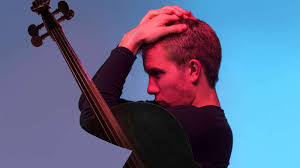
downloadANAM: Mendelssohn and Brahms – Hero Works for Strings

Utzon Room, Sydney Opera House

Faculty and Musicians of Australian National Academy of Music (ANAM – Melbourne)

7 May, 2017

Written by Victoria Watson

The programme:

Felix Mendelssohn String Quartet No. 2 in A minor, Op. 13 (1827)

Josephine Chung and Kyla Matsuura-Miller – Violin/ Caroline Henbest (Faculty) – Viola/ Jonathan Békés – Cello

Johannes Brahms – String Sextet No. 2 in G, op.36 (1865)

Riley Skevington and Dr. Robin Wilson (Faculty) – Violin/ Beth Condon and Eli Vincent – Viola/ Howard Penny (Faculty)/ Eliza Sdarulig – Cello

“Every performance that is sent out from the stage must be received, and it is through being listened to that the performance is validated and the musician is born.”

Nick Deutsch, ANAM Artistic Director

The Sydney Opera House are to be applauded for introducing this new chamber series showcasing emerging artists and inviting the fine musicians of ANAM to perform. Melbourne has long celebrated the wealth of musical talent nurtured at ANAM, and been rewarded with an abundance of excellent concerts. When funding was threatened, Melbourne’s arts community stood firmly behind saving this glorious institution.

The opening concert of the series set a high standard for the future, with two outstanding ensembles performing German Romantic string music of the highest order.

The earlier work of Mendelssohn, composed when he was only eighteen, pays tribute to the composer’s dedication to Beethoven, and particularly to the complex, late string quartets. At a time when they were little understood, and even dismissed, Mendelssohn was an assiduous devotee, and he imbues his A minor quartet with a youthful fervour inspired by his study of Beethoven. The work is cyclic in nature, based on an earlier song “Ist es wahr?’, with versions of the song’s motif appearing in all four movements. The hauntingly beautiful homophonic opening music returns at the very end, creating a balanced structure that is deeply satisfying.

Every musician in this offering – whether student, young professional or seasoned master – was committed to the creation of an ensemble that breathes as one and honours the composer’s rich emotional score. Dynamics were bold and, in the clean acoustic of the Utzon Room, at times, the pianissimi almost disappeared from the trembling strings. The fortes were exciting, with great rhythmic drive from the cello played by Jonathan Békés. Sydney violinist Josephine Chung led the group – and was the youngest performer – the same tender age as Mendelssohn when he wrote the score. Her tone captured a fragile melancholy with lyrical phrasing that set the tone for the ensemble.

With no interval, and just a quick change of personnel on stage, ANAM’s Head of Strings, Howard Penny, compensated for the lack of programme notes by speaking very engagingly about both works, and the aims of ANAM. He pointed out a number of details that were illuminating for the audience, before they heard the second string sextet of Brahms’ mature middle period. Brahms’ past love and ongoing admiration for Clara Schumann, the recent death of his mother and an intense but doomed romance with the singer Agathe von Siebold all played a role in the background to the writing of this passionate work. Brahms was also working on his mighty German Requiem at the time.

The extended first movement could virtually stand alone, and was impressive in its delivery. Juxtaposed with the cyclic unifying elements of the Mendelssohn score, Brahms’ sextet was more complex and demanding. There is plenty to admire, though, in the classic forms and the innovative harmony and colours. In the complex contrapuntal sections, the ensemble allowed for textural clarity by bringing parts into the dynamic foreground very effectively. The dance-like sections influenced by Hungarian and German folk music were delightful and rhythmically exciting. There was an excellent ensemble at all times, and strength of leadership from both first violin Riley Skevington and the assured masterly cello of Howard Penny.

Dr. Robin Wilson not only played second violin and teaches a number of the other players, but his PhD studies on the performance practice of Brahms’ works clearly informed this exuberant reading.

This concert offered a perfect example of the educational principles at play at ANAM, with both the performers and their audiences the richer for it.

“At ANAM, our visiting artists – all musical titans – not only instruct our young musicians, they share the stage with them as colleagues. It’s an amazing opportunity and the results are extraordinary.”

Nick Deutsch


Victoria Watson for SoundsLikeSydney

Victoria Watson is a graduate of Melbourne university and VCA. She has appeared regularly as a soprano with the Victoria State Opera and has toured and served as artistic director of many chamber ensembles.

She has performed with Sydney Symphony Orchestra and for ten years, was artistic director of a major opera education project with Opera Australia. Since 2015 she has moved into directing opera including Mozart’s Cosi Fan Tutte at the Independent theatre.

Victoria has lectured in voice at the major universities in Melbourne, and is currently a tutor at UNSW. Having taught at major Sydney secondary colleges, she now runs a busy private singing studio. She is a published author on opera and a popular freelance music and theatre lecturer and advocate for Australian artists around the world.

Similar Posts

  • Concert Review: Senses & Sensibilities/ Australia Piano Quartet

      Senses & Sensibilities – Australia Piano Quartet   Rebecca Chan (Violin), James Wannan (Viola), Thomas Rann (Cello), Daniel de Borah (Piano) With special guests: Dr. Jordan Nguyen, Jessica Irwin  16 July 2016, Utzon Room, Sydney Opera House  The Australian Piano Quartet (APQ) has a stated aim for each concert of programming a recognised masterpiece, an…

  • Concert Review: Splendour And Mystery/Sydney Chamber Choir

    Splendour and Mystery/ Sydney Chamber Choir
    Verbrugghen Hall, Sydney Conservatorium of Music
    Australian Digital Concert Hall
    25 March, 2023
    In Splendour and Mystery, Sydney Chamber Choir under the direction of Sam Allchurch joined forces with Camerata Antica led by Matthew Manchester and organist Thomas Wilson in an adventurous anthology of music written for double choir. Specialising in the music of the 16th and 17th centuries, the founder of Camerata Antica, Matthew Manchester playing the fiendishly difficult cornetto, was joined by Michael Wyborn, William Kinmont and Paolo Franks playing the equally challenging alto, tenor and bass sackbutts respectively.
    Bookended with pieces by Giovanni Gabrieli with one of his refreshing Canzonas in the middle, the program also contained music by living Australasian composers Clare Maclean and Brooke Shelley, Gabrieli’s contemporary and student Heinrich Schütz and 20th century composers John Tavener and Frank Martin. Together these composers explore and exploit the potential of the double choir with its opportunities for super-rich harmonies, added melodic lines, imitation, choral interplay and variations in the positioning of the singers.
    The opening motet, Gabrieli’s Jubilate Deo omnis terra, C 65 was quite literally a musical shout for joy. A major part of this journey back in time to Renaissance Venice was the unique sound of Camerata Antica. Heralded by the instruments, the 10 lines of the choir sang an uplifting, lively and tightly dotted chorus, alternating with homophonic passages. Allchurch and his ensemble clearly delineated the rhythms, changing time signatures, hemiolas and other displaced accents which created the buoyancy of this celebratory piece.
    John Tavener’s brilliant A Hymn to the Mother of God transcends the mortal and looks to the cosmic powers of Mother Mary. Writing in the style of canon, with imitative lines that start in quick succession and not necessarily in harmony, Tavener creates a sense of ‘other-worldliness’ in this simple but awe-inducing piece in three-sections. It was a slow burn as the two choirs sang with shimmering lightness and a sense of spinning through space, creating vivid colours and  clusters of clashing chords with impressive control as the voices rose in range and dynamic to its full-bodied climax.
    The program moved imperceptibly to the German Magnificat by Heinrich Schütz, as the choirs were joined by organ and instruments. This was a relevant and important inclusion as Gabrieli himself taught Schütz in this multi-choral technique which Schütz then developed in his own style.
    Clare Maclean’s moving Christ the King was sublimely sung, opening in the manner of a plainchant by the female voices which peeled off into mirroring phrases by the other voices, ending in a reprise of the plainchant. Premiered by this choir in 1984, it is precisely opportunities like these which new composers need for their music to be heard and re-heard until it becomes recognizable to listeners and enters the DNA of the concert repertoire.
    The short and brilliant burst of Gabrieli’s Canzona seconda, C 187  from Camerata Antica showcased these rudimentary instruments in all their imperfect glory as the choir positioned itself for Frank’s only unaccompanied choral work, the demanding  Mass for double choir, considered to be one of the finest and most complex pieces of 20th century choral music. The choir did ample justice to this piece which incorporates the aesthetics of Renaissance music, French Impressionism, Schoenberg’s twelve-note system and J S Bach. The altos began the Kyrie with a freely-flowing, supplicating melody; the Gloria built step-wise to cluster chords; the Credo was a business-like affirmation of faith; the canon-styled Et Resurrexit was levity, hope and word-painting to perfection; the Sanctus introduced softer harmonies from the male voices. The mass, Version 1, ended with a powerful Benedictus. Fast forward to 1926 and Martin added the Agnus Dei, the crowning glory to this choral magnum opus. The mass culminated in a glorious unification of the choirs.
    Brooke Shelley’s Heavenly Father, composed in 2022, performed in the presence of the composer was premiered in November 2022, by the Sydney Chamber Choir. A lyrical and beautifully textured piece, it is very pleasing that it has quickly been programmed again. Like the slightly older piece by Maclean, it is critical that new pieces of merit such as these, are given regular and frequent hearings so that they may be heard widely and face the test of time.
    Finally, Gabrieli’s Magnificat a 14, C 79 brought together the full instrumental and vocal forces of the ensemble. Using the 16th century Venetian technique of cori spezzati (split choirs), the brighter sound of the female voices and cornetto took to the left gallery with the male voices and the thrilling grunt of the bass and other sackbutts in the right gallery with a mixed ensemble placed and organ placed centrally on stage.
    This was an intelligent and audacious program from Allchurch, performed with glorious sound by a choir secure in technique, pitch and musicianship.

  • CD Review: Ten Top Tenors

    Ten Top Tenors is a double CD set which brings together the voices of some of the most prodigiously talented singers of our times. A compilation from Decca, it’s an entertaining collection that places these voices next to each allowing contrasts and comparisons. The recordings, taken from  each of the decades since the 1960s, also…

  • Album Review: Omega Ensemble: Mozart/ Munro/ Palmer

    The Sydney based Omega Ensemble has come of age with its debut album Mozart-Munro-Palmer (ABC Classics 481 4667) that gathers a triptych of works for clarinet and chamber ensemble. The album features Artistic Director David Rowden, who founded the ensemble in 2005, as the clarinet soloist anchoring the tracks with the matchless Clarinet Quintet in…

  • Album Review: Pastoral Fables – Works For Cor Anglais And Piano/ Oguey And Da Costa/ ABC Classics

    Pastoral Fables, a new album from ABC Classics is a collection of eight Romantic works, mostly transcribed by Alexander Oguey for cor anglais and piano, performed by Oguey, cor anglais (Marigaux, Paris) and Neal Peres Da Costa, grand piano (Viennese action grand piano after an 1868 model by J B Streicher and reproduced by Paul McNulty)….

Leave a Reply