Elina Granca ‘Romantique’ CD review – simply glorious
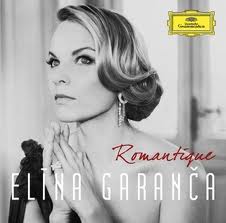
Listening to Elīna Garanča’s latest CD is a supremely gratifying experience. Released by Deutsche Grammophon (DG 479 0071), Romantique is a collection of 9 opera arias performed by the Latvian lyric mezzo – soprano with the Filharmonica del Tetro Comunale di Bologna conducted by Yves Abel.

The arias on this CD (her 5th solo album), are owned by heroines of 19th century opera. This is not a populist collection. Rather, it is informed repertoire that is perfectly suited to her voice at this point in her career and which she performs with complete mastery. The power of her voice is ever present  along with flawless technique, silken tone and a glorious range.

The arias, mostly sung in French are rarely heard gems from the bel canto and dramatic repertoire.  Three arias from Gounod feature on the recording: O ma lyre immortelle from Sapho, Faites-lui mes aveux from Faust and Plus grand dans son obscurité from La Reine de saba; Tchaikovsky’s Joan of Arc (The Maid of Orléans) and Saint-Saens’ Mon coeur s’ouvre à ta voix from Samson et Dalila provide moments of intense drama with more bel canto arias from Donizetti Oh! Mon Fernand from La Favorite, Lalo’s De tous cotés…lorsque je t’ai vu soudain from Le Roi d’Ys and even Vaccai  Giulietta! Oh, mia Giulietta…Ah, se tu dormi from Giulietta e Romeo.

Born in Riga, in 1976, Elīna Garanča came to international attention in the final of the 2001 BBC Cardiff Singer of the World competition. Appearances in the opera houses of Europe followed, singing roles like Rosina, Cherubino, Orlofsky and Dorabella at the Vienna State Opera, Theatre an der Wein, Frankfurt, Salzburg and Paris. She made her Covent Garden debut as Dorabella in 2007 and at The Met in 2008 as Rosina.

The arias she sings on Romantique, are roles she has yet to perform on stage. The recording may be her intimation that she is indeed ready to take up this more mature repertoire.

The only thing better than listening to this recording would be to hear her performing these roles on stage.

Shamistha de Soysa for SoundsLikeSydney©
 

Similar Posts

  • The Good, the Bad and the Awkward – A new recording from Sally Whitwell

    Researching the material for her new album, The Good, the Bad and the Awkward I imagine pianist Sally Whitwell reclining in an armchair in front of her television with a box of truffles and a magnum of French champagne slaving her way through dozens of movie classics. She admits that researching this project,  was ‘too much fun’. The Good, the Bad and the Awkward is a…

  • Opera review: Madama Butterfly/Opera Australia

    Madama Butterfly  –  Giacomo Puccini Opera Australia,  Sydney Opera House 27 January 2015  Each year, Opera Australia has followed its Handa Opera on Sydney Harbour production with indoor performances of the same opera during the following year.  Presumably this is intended to entice patrons who enjoyed a performance under the stars to try ‘real’ opera…

  • Concert Review: Splendour And Mystery/Sydney Chamber Choir

    Splendour and Mystery/ Sydney Chamber Choir
    Verbrugghen Hall, Sydney Conservatorium of Music
    Australian Digital Concert Hall
    25 March, 2023
    In Splendour and Mystery, Sydney Chamber Choir under the direction of Sam Allchurch joined forces with Camerata Antica led by Matthew Manchester and organist Thomas Wilson in an adventurous anthology of music written for double choir. Specialising in the music of the 16th and 17th centuries, the founder of Camerata Antica, Matthew Manchester playing the fiendishly difficult cornetto, was joined by Michael Wyborn, William Kinmont and Paolo Franks playing the equally challenging alto, tenor and bass sackbutts respectively.
    Bookended with pieces by Giovanni Gabrieli with one of his refreshing Canzonas in the middle, the program also contained music by living Australasian composers Clare Maclean and Brooke Shelley, Gabrieli’s contemporary and student Heinrich Schütz and 20th century composers John Tavener and Frank Martin. Together these composers explore and exploit the potential of the double choir with its opportunities for super-rich harmonies, added melodic lines, imitation, choral interplay and variations in the positioning of the singers.
    The opening motet, Gabrieli’s Jubilate Deo omnis terra, C 65 was quite literally a musical shout for joy. A major part of this journey back in time to Renaissance Venice was the unique sound of Camerata Antica. Heralded by the instruments, the 10 lines of the choir sang an uplifting, lively and tightly dotted chorus, alternating with homophonic passages. Allchurch and his ensemble clearly delineated the rhythms, changing time signatures, hemiolas and other displaced accents which created the buoyancy of this celebratory piece.
    John Tavener’s brilliant A Hymn to the Mother of God transcends the mortal and looks to the cosmic powers of Mother Mary. Writing in the style of canon, with imitative lines that start in quick succession and not necessarily in harmony, Tavener creates a sense of ‘other-worldliness’ in this simple but awe-inducing piece in three-sections. It was a slow burn as the two choirs sang with shimmering lightness and a sense of spinning through space, creating vivid colours and  clusters of clashing chords with impressive control as the voices rose in range and dynamic to its full-bodied climax.
    The program moved imperceptibly to the German Magnificat by Heinrich Schütz, as the choirs were joined by organ and instruments. This was a relevant and important inclusion as Gabrieli himself taught Schütz in this multi-choral technique which Schütz then developed in his own style.
    Clare Maclean’s moving Christ the King was sublimely sung, opening in the manner of a plainchant by the female voices which peeled off into mirroring phrases by the other voices, ending in a reprise of the plainchant. Premiered by this choir in 1984, it is precisely opportunities like these which new composers need for their music to be heard and re-heard until it becomes recognizable to listeners and enters the DNA of the concert repertoire.
    The short and brilliant burst of Gabrieli’s Canzona seconda, C 187  from Camerata Antica showcased these rudimentary instruments in all their imperfect glory as the choir positioned itself for Frank’s only unaccompanied choral work, the demanding  Mass for double choir, considered to be one of the finest and most complex pieces of 20th century choral music. The choir did ample justice to this piece which incorporates the aesthetics of Renaissance music, French Impressionism, Schoenberg’s twelve-note system and J S Bach. The altos began the Kyrie with a freely-flowing, supplicating melody; the Gloria built step-wise to cluster chords; the Credo was a business-like affirmation of faith; the canon-styled Et Resurrexit was levity, hope and word-painting to perfection; the Sanctus introduced softer harmonies from the male voices. The mass, Version 1, ended with a powerful Benedictus. Fast forward to 1926 and Martin added the Agnus Dei, the crowning glory to this choral magnum opus. The mass culminated in a glorious unification of the choirs.
    Brooke Shelley’s Heavenly Father, composed in 2022, performed in the presence of the composer was premiered in November 2022, by the Sydney Chamber Choir. A lyrical and beautifully textured piece, it is very pleasing that it has quickly been programmed again. Like the slightly older piece by Maclean, it is critical that new pieces of merit such as these, are given regular and frequent hearings so that they may be heard widely and face the test of time.
    Finally, Gabrieli’s Magnificat a 14, C 79 brought together the full instrumental and vocal forces of the ensemble. Using the 16th century Venetian technique of cori spezzati (split choirs), the brighter sound of the female voices and cornetto took to the left gallery with the male voices and the thrilling grunt of the bass and other sackbutts in the right gallery with a mixed ensemble placed and organ placed centrally on stage.
    This was an intelligent and audacious program from Allchurch, performed with glorious sound by a choir secure in technique, pitch and musicianship.

  • Concert Review: St John Passion/JS Bach/ The Choir Of St James’ King Street/ The Australian Haydn Ensemble

    St John Passion – J S Bach The Choir of St James’ with The Australian Haydn Ensemble St James’ Church, King Street, Sydney 28 March 2015 J S Bach’s St John Passion is not performed as often as his better-known St Matthew Passion, The St James’ performance in the church’s sympathetic acoustic was conducted by Warren Trevelyan-Jones who…

  • CD review: Vivaldi Concerti Per Violino V ‘Per Pisandel’/ Sinkovsky/ Il Pomo D’Oro

    Russian virtuoso violinist Dmitry Sinkovsky returns to Sydney to reprise his dazzling concert series with the Australian Brandenburg Orchestra in July/August.  To get a whiff of his style, we’re republishing the review of the album Concerti per violino V ‘Per Pisandel’  which features Sinkovsky as the soloist in a playlist that highlights the music of Vivaldi. Of the…

Leave a Reply