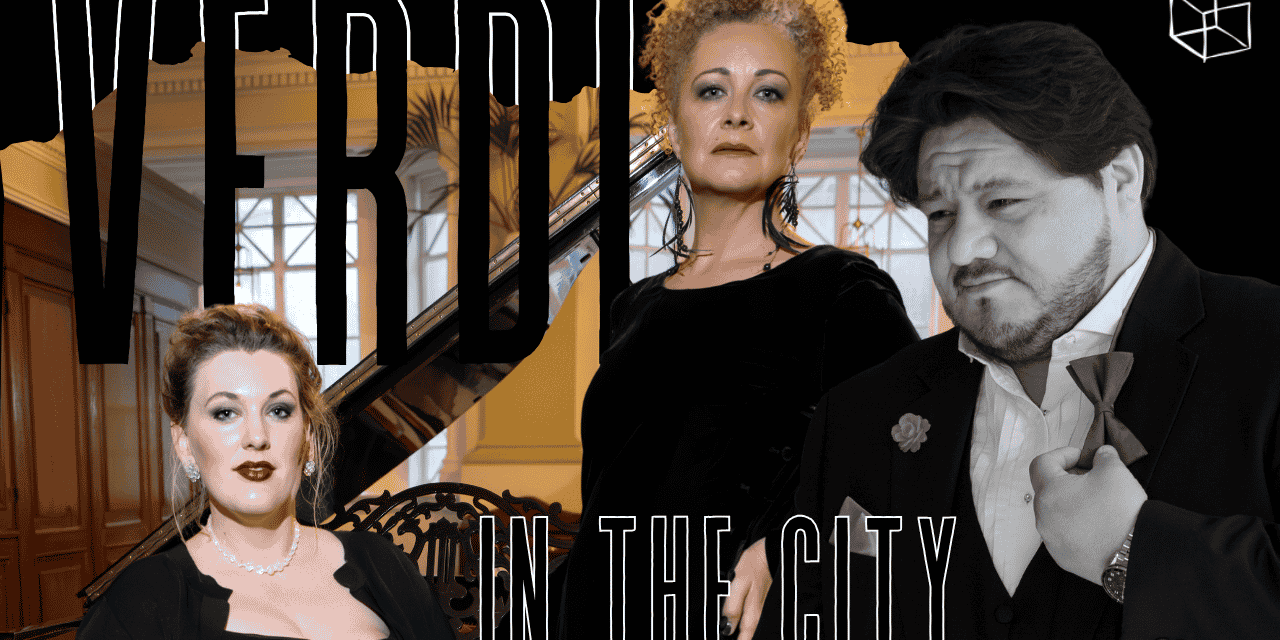
Concert review: Verdi in the City
Cello’s Dining Room, Castlereagh Boutique Hotel, Sydney
Sunday October 18th 2026 5pm
Reviewed by Victoria Watson
October in Sydney offers few opportunities to hear full blooded opera voices on stage with Opera Australia staging a musical at the opera house through the Spring season. Full credit then, to soprano Louise Keast who produced and also performed in this very operatic concert. She brought together an impressive lineup of rare Australian voices that easily rise to the challenges of Verdi’s vocal writing and drama.
The program was cleverly conceived in two parts, each dedicated to condensing and celebrating one opera. The first was the magnificent Don Carlo (Italian version) from 1866. A generous seventy-five-minute reduction of the epic five act opera allowed the central characters to each present an aria and sing in ensembles further developing their characters. The storyline was outlined every few numbers by Compere Phoebe- Celeste Humphries.
Mexican-Australian spinto tenor Diego Torre opened the concert with Don Carlo’s opening romanza set at Fontainebleau Castle. His ringing and powerful timbre seemed larger than ever in such a live acoustic as the wonderfully characterful Cello’s dining hall. It was a treat for the audience to hear his prodigious voice, so well suited to Verdi at close quarters. Soprano Louise Keast joined him as Elisabetta for the Act I love duet Di quale amor and immediately established herself as a worthy partner with a large spinto voice, thrilling upper extension and command of dynamics.
Angela Hogan was outstanding as Princess Eboli. She is an artist with exceptional command of both a very beautiful and powerful voice and dramatic variety in tone colour and physical expression. Stunningly attired in silvery grey beading she theatrically transformed the venue into a garden outside a renaissance French castle for the canzone Nei gardin del bello. She is the very definition of a stage animal and her Eboli did not disappoint. She was joined by soprano Laura Scandizzo as Tebaldo and an ensemble of female chorus conducted by Logan Birchall. Well balanced and stylish, this scene was enjoyed by the enthusiastic audience. Verdi gives full expression to exotic Spanish musical elements in this scene from Act II. Hogan relished Eboli’s showmanship and flair which establishes her firmly as a major force in the love triangle with Carlo and Elisabetta.
Bass Richard Anderson brought warmth and gravitas to a sympathetic and lyrical reading of the great aria for King Fillipo Ella giammai mámo. He was then joined by baritone Michael Honeyman as Rodrigo and the two princesses for the intensely dramatic quartet Ah!si maledetto from Act IV.
The arias for both Eboli and Elisabetta are very demanding in range and stamina but were performed with great success . Hogan was at all times in command from her thrilling high notes to the bone shaking chest voice below. Keast shone in Tu che le vanita from Don Carlo. It will be exciting to see how her career develops after winning some major competitions this year. Perhaps even more dramatic repertoire may beckon.
The second part was a shorter adaptation of Verdi’s middle period masterpiece Il Trovatore (1853). The women’s chorus, specially arranged by Jocelyn Keast, were creatively included and ably supported the soloists.
Angela Hogan dominated as Azucena achieving deep emotional connection with the troubled mother figure and eliciting strong emotional responses among the audience. Her scenes were breathtaking in both vocal assuredness and drama. The previous five soloists were joined by the rich resonance of bass Anthony Mackey as Ferrando and the ensembles rocked the foundations of the historic Castereagh hotel.
Leonora’s expressive aria Dámor sulláli rose is understandably challenging at this early stage of Keast’s Verdi career but she promises to be a Verdi soprano to be reckoned with in future. Her pianissimo in upper notes was particularly lovely.
Diego Torre was a masterful Manrico. His upper register rings out with such ease it is surprising to hear so many high notes preceded by a melodic hook upwards which occasionally mars the clarity of the melodies. Michael Honeyman was solid as Count di Luna and although he sings less of this repertoire recently it was welcome to hear him revisit it.
Pianist Bradley Gilchrist created strong orchestral colours from the piano and matched the rich vocal timbers of the singers well. He sympathetically phrased the arias to support phrasing and allow the singers breadth of space to explore the rich emotional palette of these Romantic masterworks.
SoundsLikeSydney.©
A graduate of Melbourne university and VCA, Victoria appeared regularly as a soprano with the Victoria State Opera and has toured and served as artistic director of many chamber ensembles. She has performed with the Sydney Symphony Orchestra and for ten years, was artistic director of a major opera education project with Opera Australia. Since 2015 she has moved into directing opera including Mozart’s Cosi Fan Tutte at the Independent theatre.
Victoria has lectured in voice at the major universities in Melbourne, and is currently a tutor at UNSW. Having taught at major Sydney secondary colleges, she now runs a busy private singing studio. She is a published author on opera and a popular freelance music and theatre lecturer and advocate for Australian artists around the world.